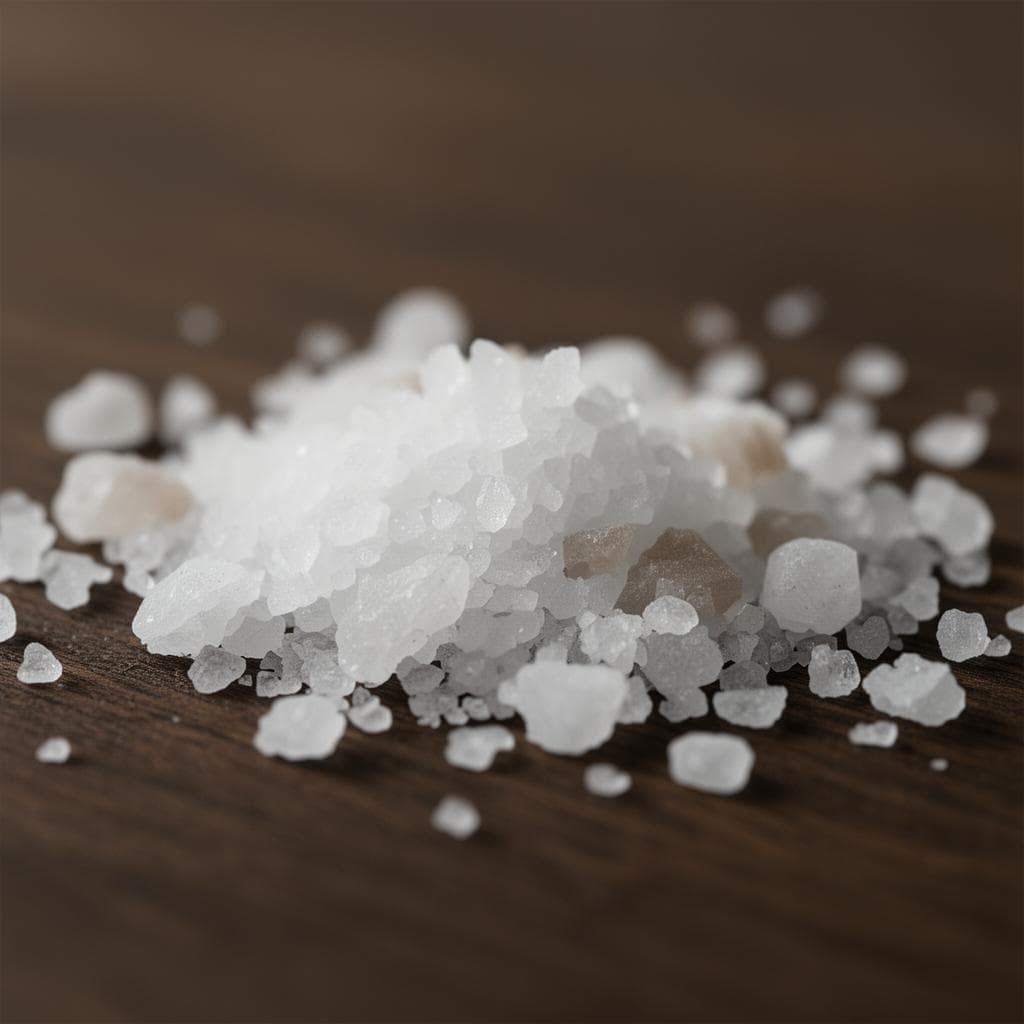
Salt: More Than Just a Pinch
By Sandy
Salt is one of the most essential substances for life. And yet, it is also one of the most misunderstood. For years, salt has been blamed, reduced, avoided. But the conversation is often incomplete. Because not all salt is the same.
Why the Body Needs Salt
Salt is not the enemy. It plays a vital role in hydration, nerve transmission, muscle function, and maintaining fluid balance. The body depends on it. But what matters is not just how much salt we consume — it is which kind.
The Difference Between Natural and Refined Salt
Natural, unrefined salts — sea salt, rock salt, mineral-rich salts — retain their original composition. Refined table salt is highly processed, stripped of its natural minerals, and often modified with additives. This difference is fundamental.
What Happens When Salt Is Refined
Refined salt goes through an industrial process where it is heated at very high temperatures, chemically cleaned, and stripped of almost all its natural minerals. What remains is almost pure sodium chloride. But natural salt originally contains magnesium, calcium, potassium, and trace minerals — elements that contribute to how salt interacts with the body.
Additives in Refined Salt
To make refined salt stable, free-flowing, and uniform, substances are added: anti-caking agents such as calcium silicate or sodium ferrocyanide, iodine in iodized salt, and sometimes aluminum derivatives. These additives, consumed daily over time, add to the body's overall chemical load.
Why This Can Be Problematic
When salt is highly refined, it loses its natural balance of minerals, becomes more aggressive in how it interacts with fluids, and can disrupt natural electrolyte balance when consumed excessively. Some concerns include increased fluid retention, strain on blood pressure regulation, and potential impact on vascular health.
Natural Salts: A Different Relationship
Natural salts are less processed. They retain trace minerals, a more complex structure, and a softer interaction with the body. They tend to have a richer taste, are often used in smaller amounts, and contribute not only sodium but a broader mineral profile.
A More Balanced Approach
A more balanced approach to salt includes choosing unrefined, high-quality salt, using it mindfully, focusing on a whole-food, mineral-rich diet, and staying properly hydrated. Salt does not need to be feared. It needs to be understood.
In the Immerse program, we explore how simple shifts in ingredients — including salt — can transform how your body feels.
A Final Reflection
Salt, in its natural form, has been part of human nourishment for centuries. It is simple. Essential. Alive with minerals. Perhaps the question is not whether we should avoid it — but whether we can return to it in a way that is less processed, more conscious, and more aligned with how the body functions.
Stay Inspired
Receive seasonal inspiration, recipes, and mindful living tips from Swara Slow Living.